ADVERTISEMENT
The Forgotten Kitchen Tool That Once Perfected Every Bake
Tucked away in the back of kitchen cabinets, buried beneath silicone spatulas and mismatched measuring cups, there’s a tool many modern bakers barely recognize—let alone use. It doesn’t beep. It doesn’t plug in. It doesn’t promise speed or convenience.
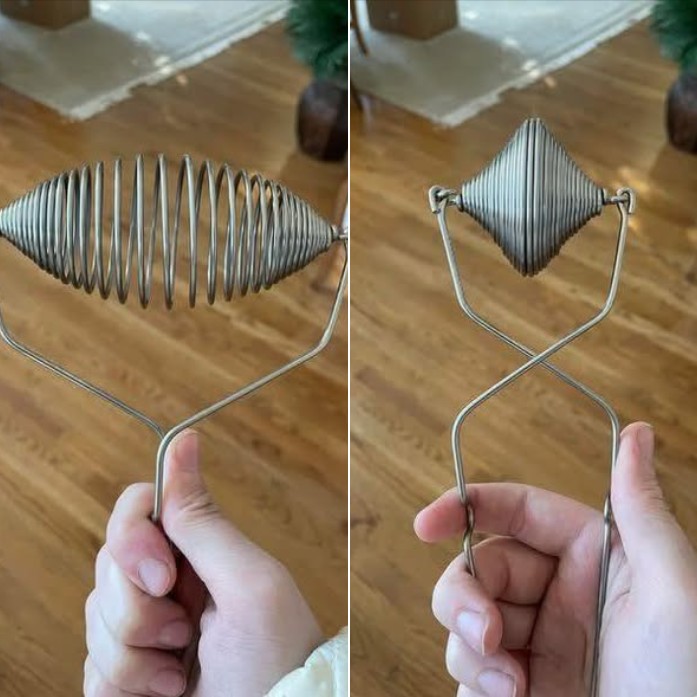
Before stand mixers, before boxed cake mixes, before “one-bowl recipes,” there was the flour sifter—a simple metal device that quietly shaped the texture, rise, and elegance of nearly every baked good that came out of a home oven.
Somewhere along the way, we stopped using it. And in doing so, we may have lost something far more important than counter space.
A Tool Every Baker Once Owned
If you step into an older kitchen—or flip through a vintage cookbook—you’ll see it everywhere. Recipes didn’t say “optional” or “if desired.” They said, plainly and confidently:
“Sift the flour.”
Not once. Often twice. Sometimes three times.
The flour sifter was as fundamental as a mixing bowl. It hung on hooks, sat proudly on countertops, and was often passed down from one generation to the next. Grandmothers knew its rhythm by heart—the soft shake, the gentle tap, the whisper of flour falling like snow.
It wasn’t fancy. It was precise.
What a Flour Sifter Actually Did (And Why It Worked)
To understand why the sifter mattered so much, you have to understand the flour of the past.
Decades ago, flour wasn’t as finely milled or consistently processed as it is today. It compacted easily during storage and transport, forming dense clumps that trapped moisture and air unevenly. Measuring flour straight from the bag often meant adding far more flour than a recipe intended.
The sifter solved several problems at once:
Aeration: It incorporated air into the flour, making batters lighter.
Consistency: It broke up clumps for even mixing.
Accuracy: Sifted flour occupied more volume, aligning measurements with recipe expectations.
Sifting wasn’t busywork. It was technique.
Continue reading…
ADVERTISEMENT
