ADVERTISEMENT
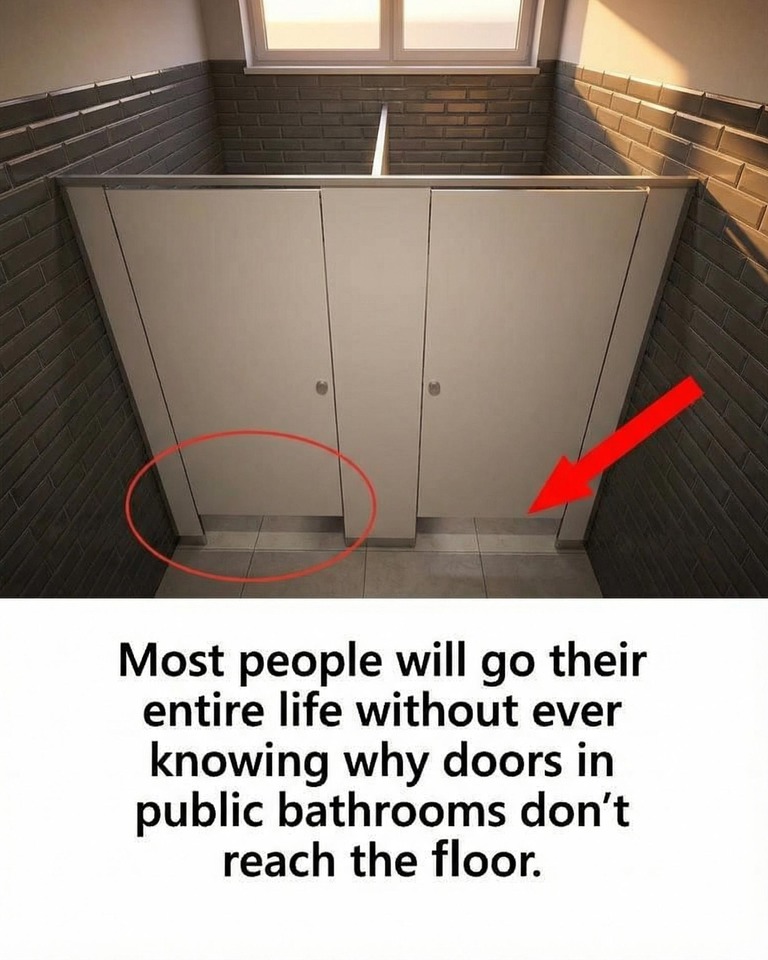
Why Public Bathroom Doors Don’t Reach the Floor: The Surprising Truth
Have you ever stepped into a public restroom, glanced at the stalls, and noticed something curious — the doors don’t reach the floor. In fact, there’s often a gap of several inches at the bottom, sometimes large enough to see someone’s shoes or the contents of a trash can. At first glance, it seems odd. Why wouldn’t designers give public bathroom doors the same full-length coverage as in a home bathroom, where doors go all the way from ceiling to floor?
The First Reason: Safety Comes First
One of the primary reasons public bathroom doors don’t reach the floor is safety. While it might feel like a loss of privacy, the gap at the bottom is actually a safety measure in several ways:
1. Emergency Access
If someone collapses, faints, or becomes unconscious inside a stall, the gap at the bottom allows others to see if something is wrong. Emergency responders or staff can quickly detect a problem and provide assistance. Without that gap, someone could be trapped for longer periods, making the stall potentially dangerous.
2. Fire Safety
In public buildings, bathrooms are often required to meet fire safety codes. The gap allows smoke to circulate and prevents a stall from becoming a dangerous trap in the event of a fire. It’s a simple but effective way to ensure safety during emergencies.
3. Visual Monitoring
Maintenance staff, security personnel, or cleaning crews can occasionally detect issues through the bottom gap. For example, if a toilet is overflowing or if someone is in distress, it’s easier to notice with doors that don’t fully close to the floor.
Public bathrooms are high-traffic areas, and sanitation is a critical concern. Doors that don’t reach the floor make cleaning more efficient:
Mopping and Sweeping: Janitors can clean the floors without needing to open each stall individually. Water, soap, and cleaning solutions can reach every corner without obstacles.
Air Circulation: A small gap helps with ventilation, preventing moisture buildup that can lead to mold and unpleasant odors.
Continue reading…
ADVERTISEMENT
