ADVERTISEMENT
Spill Management: Public restrooms often deal with accidental spills or leaks. The gap allows fluids to drain or be cleaned more effectively.
In other words, the design of the stall contributes to maintaining hygiene standards, which is crucial in environments used by hundreds or even thousands of people each day.
Another practical reason public bathroom doors don’t reach the floor is economic. Buildings with many stalls — schools, airports, malls — need to balance privacy with affordability:
Shorter Doors Use Less Material: Longer doors are more expensive to manufacture and install. Using slightly shorter doors reduces material costs, making them more budget-friendly for large facilities.
Ease of Installation: Shorter doors are easier to install and maintain. They are less prone to warping or damage from constant use, which is common in high-traffic restrooms.
Durability: A door that barely scrapes the floor is more likely to be damaged, jammed, or worn down quickly. Leaving a gap helps prolong the door’s lifespan.
Ultimately, public restrooms are designed to be practical and cost-effective while still serving their purpose.
The Fourth Reason: Privacy and Social Norms
It might seem counterintuitive that leaving a gap enhances privacy, but there’s a subtle logic:
Discouraging Loitering: The visibility at the bottom discourages inappropriate activity. People know they can be seen by staff or passersby.
Reducing Vandalism: Public restrooms are sometimes targets for vandalism. The bottom gap acts as a deterrent, as complete concealment would make illicit activities easier.
Interestingly, this shows that privacy in public spaces isn’t absolute. It’s a balance between personal space and social safety, and the gap is part of the compromise.
The Fifth Reason: Ventilation and Odor Control
Public restrooms are notorious for odors. By allowing air to circulate through the bottom gap, designers improve ventilation, which helps keep the restroom environment less stuffy:
Air Flow: The gap allows air from vents or natural airflow to move freely between stalls, reducing the concentration of odors.
Odor Dissipation: When multiple people use the restroom simultaneously, smells are less trapped in enclosed spaces, improving overall comfort.
Good ventilation is not just about comfort — it also contributes to public health, preventing the buildup of bacteria or mold caused by damp air.
Not all countries follow the same design standards for public restrooms. In some places, such as parts of Europe or Asia, stall doors may be taller, reaching closer to the floor. However, in the United States and many other countries, the standard design includes a noticeable gap.
This design reflects cultural attitudes toward public space, privacy, and safety. Americans tend to prioritize quick access, safety, and hygiene over absolute privacy, especially in facilities used by large numbers of people.
A Psychological Perspective
From a psychological standpoint, the gap at the bottom affects behavior in subtle ways:
Comfort and Reassurance: Being able to see if someone else is in distress, even if only partially, can provide reassurance in emergency situations.
Awareness of Social Space: The visible floor space reminds users that the stall is a public place, influencing behavior to be more considerate and mindful.
Reduced Claustrophobia: A completely enclosed stall can feel claustrophobic. A gap provides a small sense of openness, helping users feel less confined.
In essence, this simple design choice can improve both safety and user comfort, even if users initially feel awkward about the reduced privacy.
Common Misconceptions
Despite the practical reasons behind it, many people assume the gap is accidental or a flaw. Here are some common misconceptions:
“It’s poor design.” Actually, it’s intentional and backed by years of building code experience.
“It’s a privacy violation.” While it does reduce complete visual privacy, the design prioritizes safety, hygiene, and efficiency over total concealment.
“It’s an oversight.” On the contrary, architects and engineers consider gap height carefully to meet accessibility, fire code, and sanitation requirements.
Understanding these points helps users see public bathroom doors in a new light — not as an annoyance, but as part of a carefully considered system.
Accessibility Considerations
Public restrooms must comply with the Americans with Disabilities Act (ADA) and other accessibility standards. The gap at the bottom can actually assist accessibility in some ways:
Aid for Visually Impaired Users: A partially visible floor can help individuals with low vision navigate the stall safely.
Assistance in Emergencies: Caregivers or attendants can quickly check if someone needs help without removing the entire door.
Reduced Risk of Tripping: Full-length doors may scrape the floor or require threshold ramps that can become tripping hazards. The gap avoids this risk.
The Bottom Line: Practicality Over Perfection
At first glance, the gap under public bathroom doors may seem inconvenient or even embarrassing. But as we’ve explored, this small design choice serves multiple practical purposes:
Safety and emergency access
Hygiene and easier cleaning
Cost-effectiveness and durability
Encouraging proper behavior and reducing vandalism
Ventilation and odor control
Accessibility for all users
Designing public restrooms is not about perfection or total privacy; it’s about creating a safe, clean, and functional space for hundreds of users each day.
Tips for Navigating Public Restrooms
While we now understand why doors don’t reach the floor, some users may still feel uncomfortable. Here are a few tips:
Choose a stall wisely: End stalls often have slightly more privacy.
Use clothing strategically: If worried about visibility at the bottom, position bags or clothing carefully.
Be mindful of personal space: Recognize that the stall is a public space and act accordingly.
Understand the design: Accepting that the gap is intentional for safety and hygiene can reduce anxiety.
With these strategies, you can use public restrooms confidently and comfortably.
Conclusion: The Surprising Truth About Public Bathroom Doors
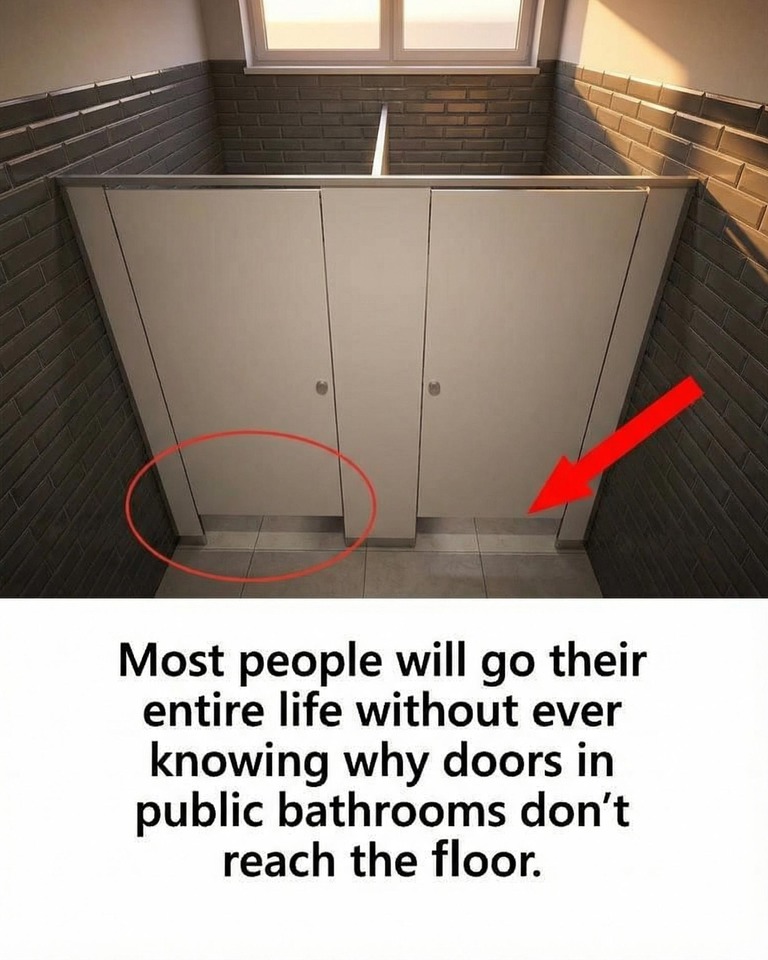
Next time you enter a public restroom and notice the gap under the stall doors, you’ll know it’s not a careless oversight — it’s a carefully thought-out design feature. From safety to hygiene, from ventilation to accessibility, the gap is a small but important part of a system that allows public restrooms to function efficiently and safely.
While it might initially feel awkward, the truth is that public bathroom doors are designed with practicality in mind, balancing privacy with public health, safety, and cost considerations. So, the next time you glance at that gap, remember: it’s not just empty space. It’s a window into the clever design and thoughtful planning that make public restrooms work for everyone.
ADVERTISEMENT
