ADVERTISEMENT
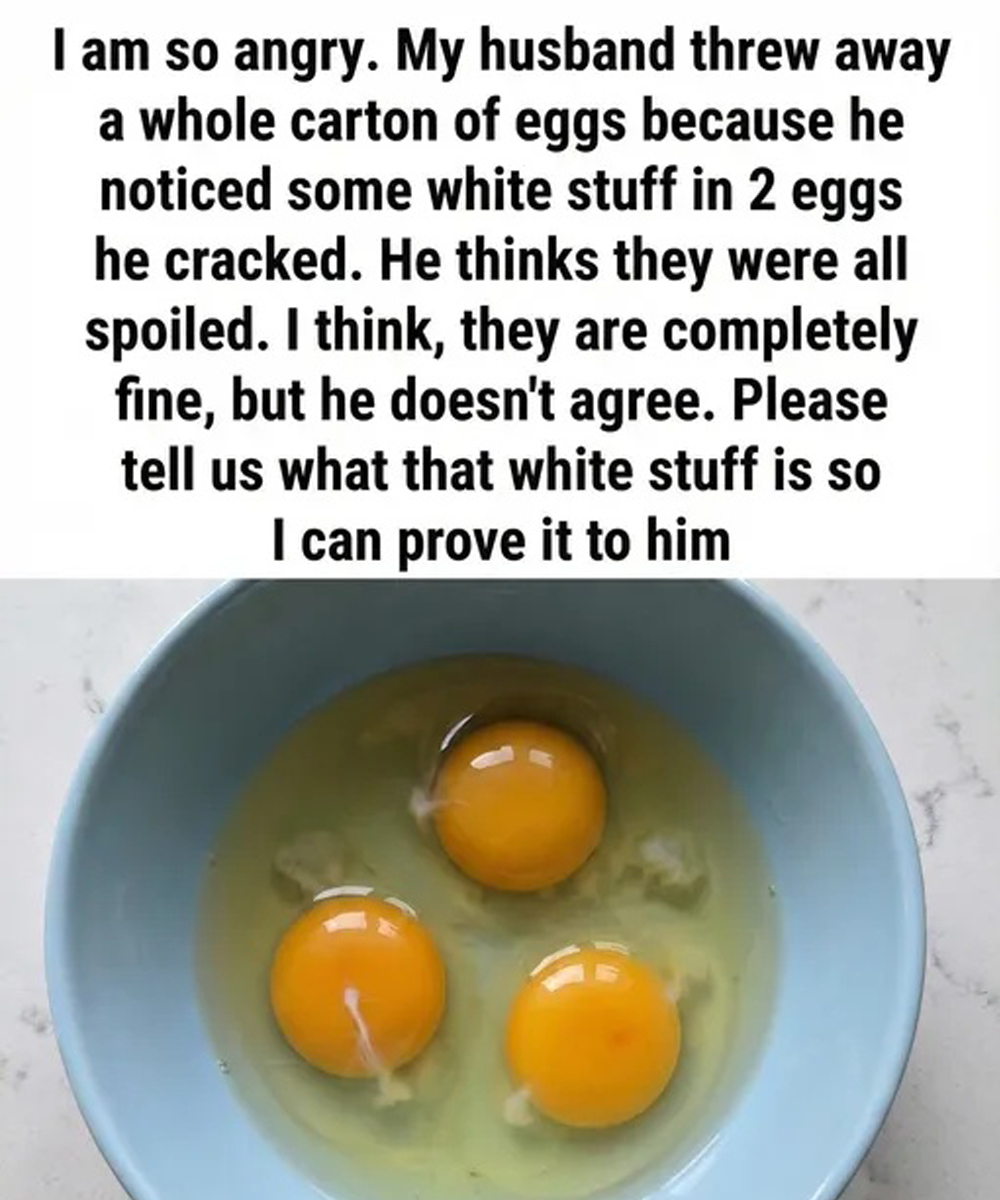
The chalaza anchors the yolk in the middle of the egg white (albumen), protecting it from damage when the egg moves, rolls, or gets gently jostled. This positioning also keeps the yolk suspended away from the shell, which helps preserve freshness.
So when you see that white strand, you’re actually looking at a sign of a well-structured egg, not a flawed one.
This is one of the most common myths—and it’s completely false.
The chalaza has nothing to do with fertilization.
Fertilized eggs have a tiny white spot on the yolk called a blastodisc
Unfertilized eggs have a similar spot called a blastoderm
The chalaza appears in both fertilized and unfertilized eggs
In other words, that white strand does not mean you’re about to hatch a chicken, and it does not mean the egg is unusual or unsafe.
If you bought your eggs from a grocery store, they are almost certainly unfertilized anyway.
Is It Safe to Eat?
The chalaza is made of protein—just like the rest of the egg white. It has no harmful properties, no strange flavor, and no impact on nutrition.
If you eat it, you won’t notice it at all once the egg is cooked.
That said, some people remove it for aesthetic reasons, especially when baking or preparing dishes where texture and appearance matter. That’s a personal preference, not a safety requirement.
Why Is the Chalaza More Noticeable in Some Eggs?
Here’s an interesting detail: the more prominent the chalaza, the fresher the egg.
In very fresh eggs, the chalaza is firm, thick, and clearly visible. As an egg ages, the chalaza gradually weakens and becomes less noticeable.
So if you crack open an egg and see a strong, ropey chalaza, that’s actually good news. It suggests the egg hasn’t been sitting around for long.
Why Does It Look So… Weird?
Let’s be honest—biology can be visually uncooperative.
The chalaza forms when the egg is created inside the hen. As the yolk spins through the oviduct, layers of egg white wrap around it. The chalaza develops from thicker strands of albumen that twist into those familiar cords.
Because they’re dense, opaque, and slightly elastic, they stand out against the smoother egg white. Our brains aren’t used to seeing stringy structures in food, so we instinctively question it.
But weird-looking doesn’t mean wrong.
Can You Remove It?
Absolutely.
If the appearance bothers you, you can remove the chalaza with a spoon or fork before cooking. Many professional bakers do this when making custards, sauces, or cakes where a silky-smooth texture matters.
Removing it won’t ruin the egg, and leaving it won’t harm the dish. It’s purely about preference.
For scrambled eggs, omelets, or fried eggs, most people don’t bother—once cooked, the chalaza disappears into the mix.
Does Every Egg Have One?
Almost every egg has chalazae, but you won’t always see them.
Factors that affect visibility include:
Freshness – fresher eggs = more visible chalaza
Egg size – larger eggs can make the chalaza more noticeable
Lighting and angle – sometimes it’s just hidden
How the egg is cracked – a clean break can reveal it more clearly
If you don’t see one, it doesn’t mean the egg is abnormal. It just means the chalaza isn’t standing out.
What the Chalaza Is Not
Let’s clear up a few common misconceptions:
❌ It is not a worm
❌ It is not a vein
❌ It is not a sign of spoilage
❌ It is not a defect
❌ It is not a baby chick
It is simply part of how eggs are designed.
Nature tends to prioritize function over aesthetics.
Eggs Are More Complex Than We Think
The chalaza is a great reminder that foods we consider “simple” are often quietly sophisticated.
An egg contains:
A protective shell
Two membranes
Air pockets
Multiple layers of albumen
A yolk rich in fats, vitamins, and proteins
Structural elements like the chalaza
All of this exists inside something you can crack open with one hand.
That’s kind of amazing.
Why This Knowledge Matters
Understanding what’s in your food helps reduce unnecessary waste and fear.
Many people throw away perfectly good eggs because they notice something unfamiliar and assume it’s unsafe. The chalaza is one of the most common reasons eggs get tossed unnecessarily.
Knowing what it is—and that it’s normal—means fewer eggs wasted and fewer moments of confusion in the kitchen.
And next time someone panics over “the stringy thing in the egg,” you get to be the calm, knowledgeable one.
The Bottom Line
That white strand in your egg is called the chalaza.
It’s a natural structure that keeps the yolk centered.
It’s safe, edible, and often a sign of freshness.
You can remove it if you want—but you don’t need to.
So the next time you crack an egg and spot that little white cord, don’t flinch. Don’t toss it. Don’t overthink it.
ADVERTISEMENT
