ADVERTISEMENT
What Does ‘SSSS’ On Your Boarding Pass Mean? A Complete Guide
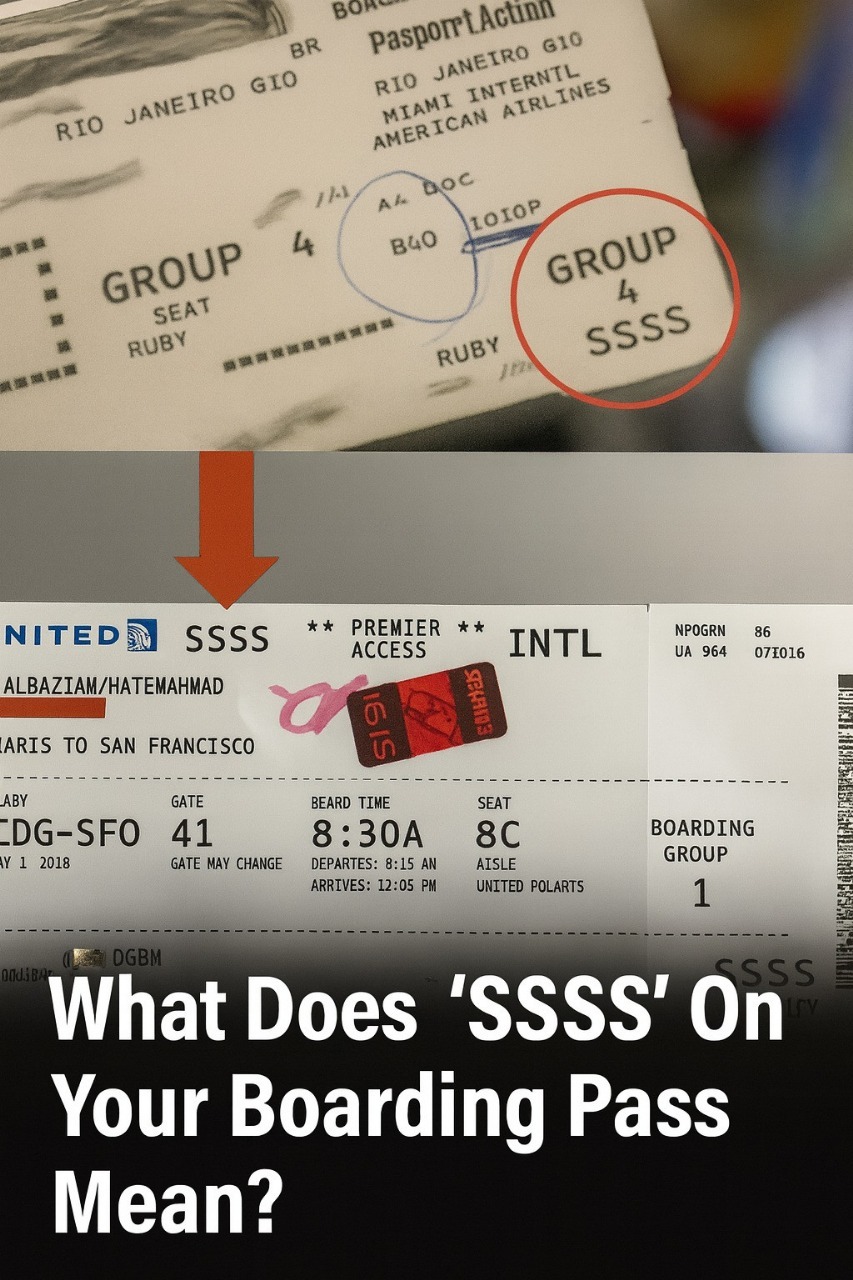
If you’ve ever glanced at your boarding pass and noticed the letters “SSSS” staring back at you, your first reaction was probably confusion—or panic. After all, most of us are used to the familiar: flight numbers, departure times, and gate codes. Four mysterious letters in all caps? That’s enough to make anyone feel like they accidentally signed up for a spy thriller.
What ‘SSSS’ Stands For
“SSSS” stands for Secondary Security Screening Selection. In plain English, it means the Transportation Security Administration (TSA) has flagged your boarding pass for extra screening at the airport.
This isn’t necessarily a judgment or accusation. It doesn’t automatically mean you are suspicious, dangerous, or under investigation. It simply indicates that TSA has determined your flight or travel profile requires additional security checks before you can board.
Secondary screenings can include:
A more thorough luggage inspection (both carry-on and checked baggage)
Enhanced pat-downs
Additional questioning by security officers
Scanning of electronic devices
Why You Might Get ‘SSSS’
There’s no single reason why someone receives SSSS. In fact, it can feel random. But TSA and security experts have identified several common triggers:
Random Selection
TSA sometimes selects passengers randomly to ensure that the system remains unpredictable. Randomization is a key tool in aviation security.
If you get SSSS by chance, it’s not personal—it’s just a part of a random security measure.
Traveling Internationally
Certain international flights, especially those to or from countries with heightened security alerts, often have more passengers flagged for secondary screening.
Continue reading…
ADVERTISEMENT
