ADVERTISEMENT
Even The Daily Show used the lineup as fodder for comedy, suggesting that aside from Kid Rock, many of the acts are unrecognizable to a broad audience and framing the whole thing as a punchline amid cultural polarization.
Overall, one of the most common refrains is that this event feels less like a genuine creative showcase and more like a performative counter-programming stunt meant to signal allegiance to a set of cultural values rather than celebrate music.
On the other side of the reaction spectrum, supporters have echoed a familiar refrain: this show offers an alternative to what they see as progressive overreach in mainstream entertainment.
A common comment among conservative circles is that the NFL’s selection of Bad Bunny—an artist whose music is primarily in Spanish and whose public persona leans into global, urban pop culture—was too “woke” or not representative of what they see as traditional American values.
Turning Point USA has pitched the All-American Halftime Show as a celebration of “American culture” intended for viewers who might choose not to watch or feel alienated by the official halftime performance. Headlines and social media posts from supporters often repeat the same core idea: this is a halftime show for people who feel left out of mainstream entertainment choices.
Even some performers themselves have leaned into that framing, with Kid Rock describing the event as a kind of “David and Goliath” moment when compared to the massive cultural force of the Super Bowl’s headline halftime act.
The similarity in messaging—that this is a “pro-America” alternative to the official show—creates a consistent narrative among supporters.
3. A Divided Cultural Landscape Reflects Shared Sentiments
One reason the reactions have such a uniform tone is that this lineup didn’t emerge in a vacuum—it’s a product of cultural friction that has been growing for months.
When the NFL announced Bad Bunny as the official halftime performer, there was immediate backlash among conservative commentators who claimed his selection didn’t represent “American culture” in the way they envisioned it.
TPUSA’s halftime show is the culmination of that sentiment. And because the backlash was already widespread before the lineup was ever announced, many of the responses afterward understandably followed similar lines of critique or support.
In simpler terms: people were already saying the same things about this idea before the lineup dropped—and the lineup hasn’t changed their fundamental views so much as given them something concrete to attach those views to.
Why the Uniform Reaction Matters
You might wonder: why does it seem like everyone is saying the same thing about this halftime show lineup? There are a few reasons:
1. It’s Not Just Music—It’s Symbolism
This isn’t a neutral entertainment event. It’s framed as a reaction to another cultural choice (Bad Bunny) and therefore invites discussion about identity, values, and national symbolism—not just musical tastes.
In that context, people aren’t just evaluating artists—they’re evaluating what the event represents. That naturally leads to aligned reactions across communities that already formed opinions about the broader cultural issue.
In today’s media environment, entertainment rarely exists outside of politics—especially when it’s openly designed as a political alternative.
The lineup and event branding lean into explicit themes (faith, family, freedom), which primes audiences to interpret the show through a socio-political lens. When entertainment is tied to cultural identity, reactions tend to align along ideological lines, making broad agreement (or disagreement) more visible.
3. Social Media Echo Chambers Amplify Consensus
Platforms like X, Reddit, and news comment sections tend to cluster people with similar viewpoints together—and when a topic is as charged as this halftime show, echo chambers amplify shared sentiments quickly.
So while individual opinions might vary in reality, the visible reactions tend to look more unified, because like-minded users are more likely to engage publicly.
The Bigger Picture: Dividing Lines in American Pop Culture
This moment around the Super Bowl halftime—both the official NFL performance and the TPUSA alternative—highlights how pop culture has become a frontline in broader cultural debates.
In previous decades, the Super Bowl halftime might have been discussed mainly in terms of ratings, choreography, and song choices. Today, it’s a platform where issues of language, identity, values, and nationalism are being played out in public view.
Turning Point USA’s All-American Halftime Show is one manifestation of that shift: a lineup and event that are intentionally woven into the cultural and political conversations people are already having online and off.
Whether you think this alternative halftime show is a genuine entertainment offering, a culture-war stunt, or something in between, one thing is clear: it has made an impact not because of the music alone, but because it symbolizes a broader conversation about who gets to define American culture and celebration.
Conclusion: More Than Just a Lineup
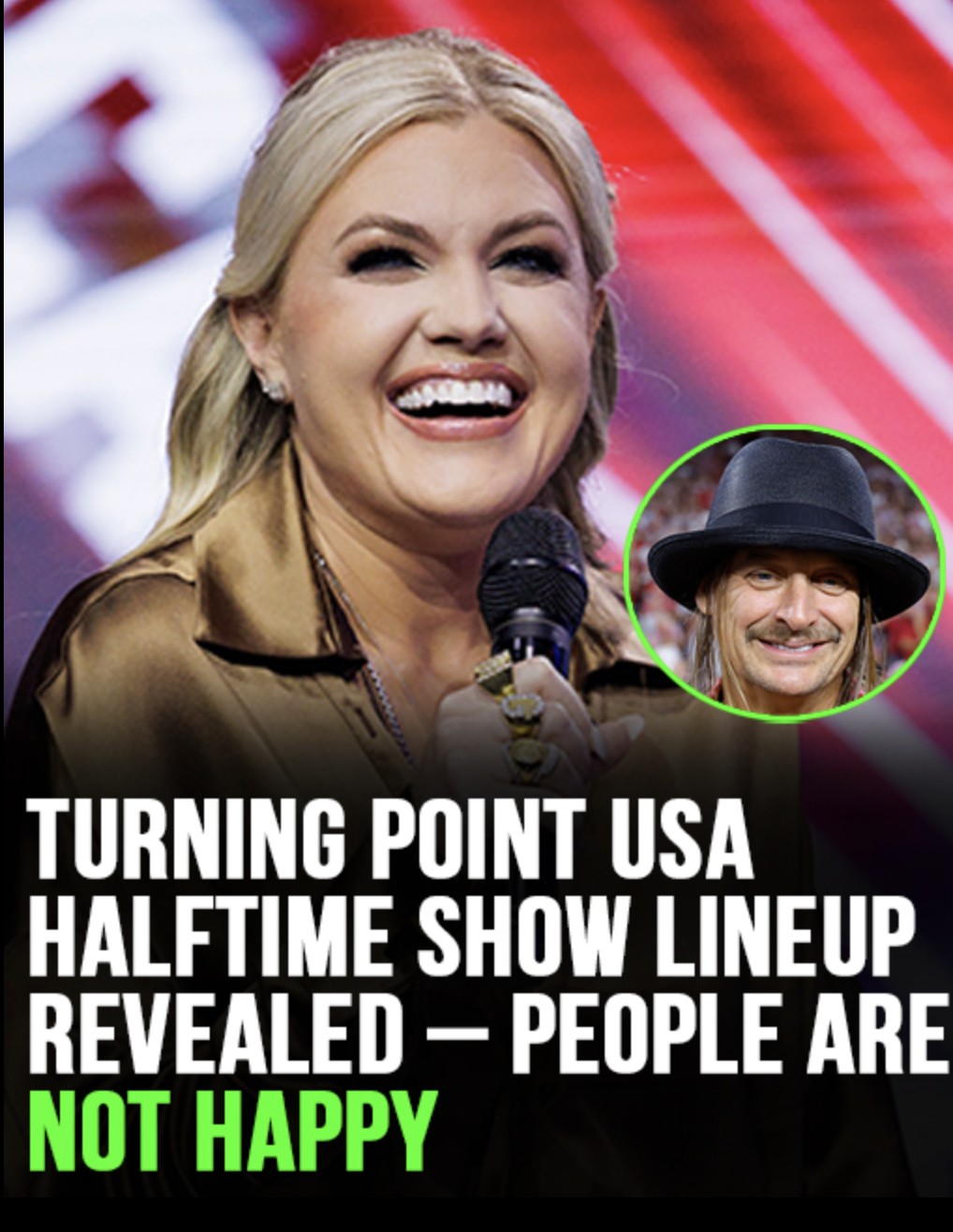
The revelation of the Turning Point USA All-American Halftime Show lineup—headlined by Kid Rock with performances from Brantley Gilbert, Lee Brice, and Gabby Barrett—is more than an announcement about performers. It’s a flashpoint in a cultural debate, and almost everyone responding seems to be saying versions of the same thing:
Critics see it as political spectacle and a sign of division
Supporters see it as a needed alternative reflecting their values
The broader public sees it as a cultural moment reflecting deeper divides
In this era, even the halftime show isn’t just entertainment—it’s a mirror of America’s current cultural dynamics, and the reactions reflect that shared context just as much as any individual opinion.
ADVERTISEMENT
