ADVERTISEMENT
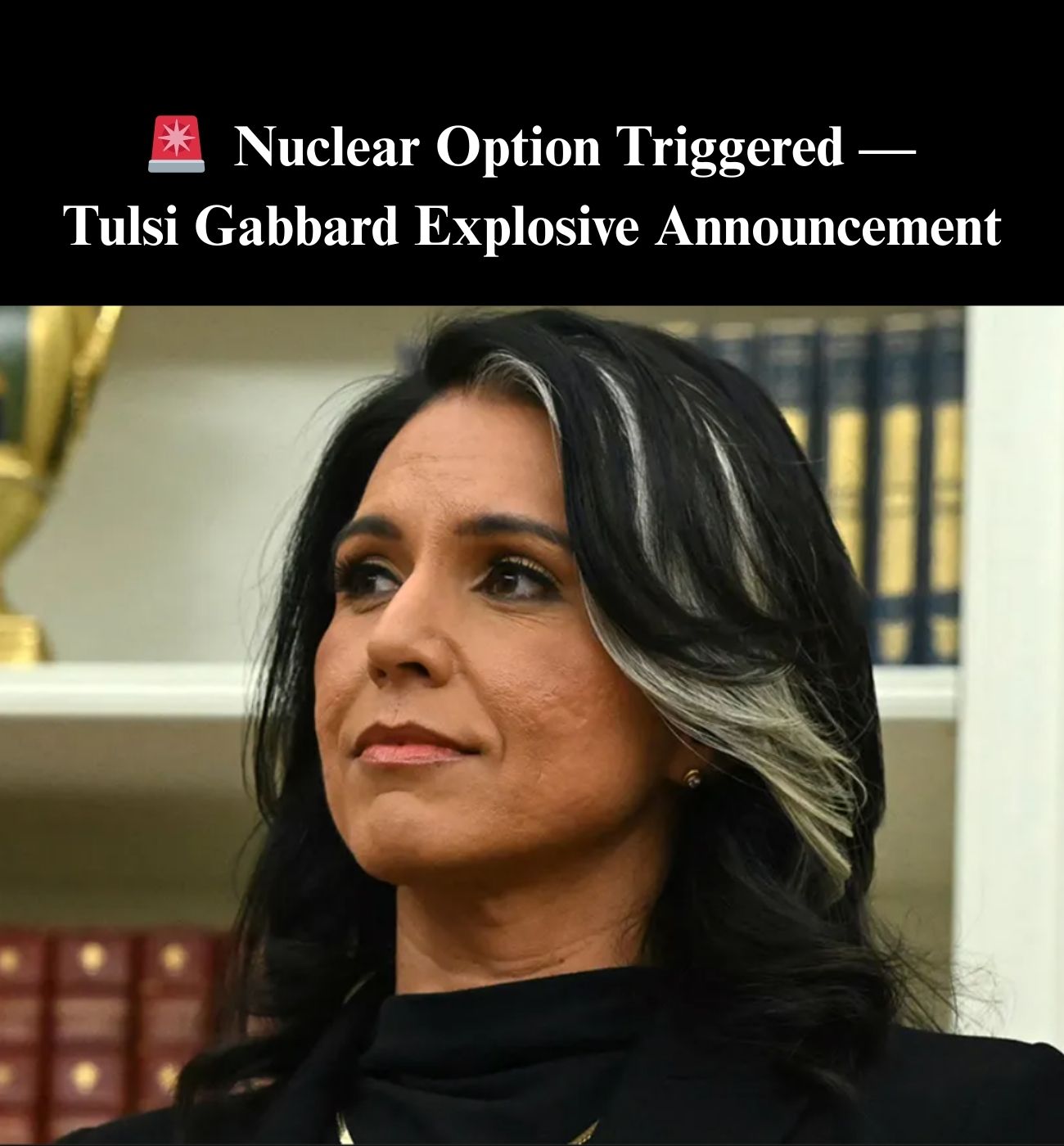
She was seen facilitating communication between President Trump and FBI agents during the operation — something rare and unusual in standard federal practice.
These actions led members of Congress — particularly Democrats — to demand immediate briefings on why she was there and what authority she was acting under.
The Trump administration and Gabbard herself have offered several justifications for her presence, which they say was lawful and within her authority:
1. Presidential Request
Gabbard stated in a letter to lawmakers that her presence was requested by President Trump, and she attended the FBI activity in Georgia at his direction. She emphasized that she was there only for a short time to observe — not to conduct the search or provide orders.
2. Election Security Authority
In her communications with Congress, Gabbard cited her “broad statutory authority to coordinate, integrate, and analyze intelligence related to election security, including counterintelligence, foreign influence, and cybersecurity.” She argued that this mandate covers the monitoring of potential threats to election infrastructure and justified her attendance under those provisions.
According to Gabbard, she did not issue any directives, nor did she or the President ask questions that would have influenced the operation itself. She also stressed that she would share complete intelligence assessments with Congress once they were ready, arguing that briefing lawmakers prematurely would be irresponsible.
3. No Operational Control
Both Gabbard and the administration have insisted that she did not participate in the raid’s execution, which was carried out by FBI agents under a court‑approved warrant. She described her role as observational and analytical rather than operational.
Administration officials have also framed her involvement as part of ongoing efforts to assess vulnerabilities in electronic voting systems and election infrastructure — ostensibly within the scope of election security and national intelligence.
Critics and Bipartisan Backlash
Even with these defenses, significant controversy has erupted. Critics from both political sides have raised concerns, albeit for different reasons.
1. Constitutional and Legal Concerns
Many lawmakers, especially Democrats, argue that a domestic law enforcement operation — even one involving election materials — should not involve the DNI in an on‑site role. They see this as a blurring of lines between foreign intelligence duties and domestic law enforcement, potentially violating the intent of legal restrictions on intelligence agencies.
Senator Mark Warner (D‑Va.) and Representative Jim Himes (D‑Conn.) have called for Gabbard to testify about her actions and for clarity on why the DNI was included in a criminal investigation where her statutory role does not usually apply.
Some critics contend her involvement could create precedent for future intelligence participation in politically sensitive domestic investigations, raising separation‑of‑powers concerns.
Opposition voices argue that Gabbard risks being seen as a political operative rather than an impartial intelligence leader, particularly given her facilitation of a photo‑op phone call between Trump and FBI agents during the raid — a contact that breaks with longstanding norms separating executive political authority from ongoing investigations.
Some former intelligence officials and lawmakers have described the call and presence as inappropriate and an example of politicizing law enforcement or intelligence work.
3. Broader Election Integrity Fears
Democrats in Georgia specifically have framed the Fulton County raid as unprecedented interference in local election processes. They have filed motions to demand the return of seized ballots and materials, calling the raid an overreach that threatens election integrity and state sovereignty.
Republican critics of Gabbard — including some who might otherwise support Trump’s focus on election security — have also questioned the political optics of the spy chief at a domestic ballot records raid.
Why This Matters Now
This controversy is happening at a critical time — with 2026 midterms looming and the 2028 presidential race already in discussion. The election system and how it is overseen are deeply politicized topics, and the involvement of top federal officials in investigations tied to election records amplifies public concerns.
1. The Integrity of Federal Agency Roles
The situation raises important questions about how federal intelligence and law enforcement agencies should coordinate — and where their responsibilities begin and end. Traditionally, domestic criminal investigations fall under the Department of Justice and FBI, while the intelligence community focuses on foreign threats. Mixing those functions can erode trust in both institutions.
2. Public Confidence in Elections
The optics of federal intervention in a county election office that administers votes — especially in a county with a history of close races and political tension — can undermine public confidence in election administration and fairness. It fuels narratives of political interference regardless of legal justification.
3. Oversight and Accountability
Gabbard’s defenses underscore the need for clear oversight and accountability mechanisms for national intelligence actions that touch on domestic issues. If the DNI’s authority can extend into domestic operations under certain interpretations, lawmakers and courts may need to clarify the legal boundaries.
Looking Ahead: What Comes Next
As of early February 2026:
Georgia officials are seeking the return of the ballots and voting records seized by the FBI, arguing the raid was unlawful or overly broad.
Democratic lawmakers continue pushing for briefings and possible hearings on Gabbard’s role, demanding more transparency.
Legal and constitutional scholars are likely to debate the scope of the DNI’s statutory authorities, especially in election security contexts.
Meanwhile, the Trump administration stands by its narrative that protecting election integrity — including scrutiny of vulnerabilities in voting systems — is a legitimate mission for national security agencies. Whether that argument will hold up under legislative or judicial scrutiny remains to be seen.
Conclusion: A Crossroads for Intelligence, Law Enforcement, and Election Trust
The Trump administration’s robust defense of Tulsi Gabbard’s presence at an FBI ballot records raid in Georgia highlights deep tensions in U.S. governance: balancing election security, intelligence mandates, and the rule of law. While the administration insists Gabbard acted within her authority and at presidential request, critics across the political spectrum warn that mixing intelligence leadership with domestic investigative activity — especially one tied to politically charged claims about election fraud — could undermine institutional norms and public trust.
This episode is more than a headline; it’s a test of how America’s institutions handle the fraught intersection of elections, intelligence, and law enforcement in an era marked by polarization and distrust. As investigations continue and legal challenges unfold, how these questions are resolved could shape public confidence in elections and democratic processes for years to come.
ADVERTISEMENT
