ADVERTISEMENT
SCOTUS Decision on Mail‑In Voting Rules Could Impact Elections Going Forward
In early 2026, the U.S. Supreme Court issued a decision that has significant implications for mail‑in voting, a method of casting ballots that has become central to American elections — and politically contentious — since the 2020 election cycle. The ruling doesn’t directly overturn any mail‑in voting law yet, but it opens the door to more legal challenges by federal candidates against state voting rules and sets up future high‑stakes litigation over when and how mail‑in ballots may be counted.
The Core Case: Bost v. Illinois and SCOTUS’ Ruling
One major dispute the Court addressed early in 2026 came from Illinois, where U.S. Rep. Mike Bost (R‑IL) challenged a state law that allows election officials to count mail‑in ballots received after Election Day, so long as they were postmarked on or before Election Day.
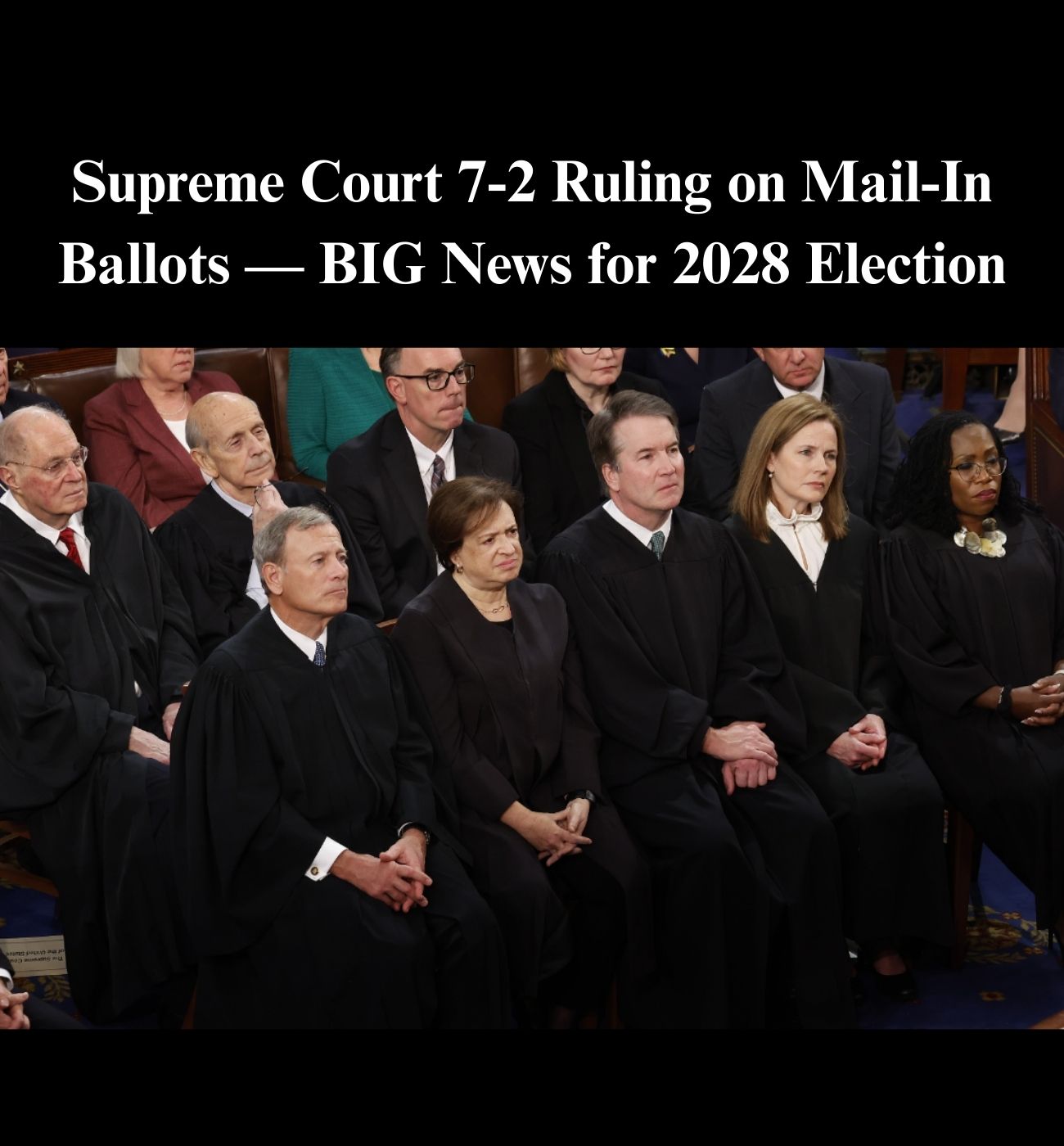
In a 7‑2 decision, the Supreme Court ruled that Bost — as a federal candidate — has the standing (legal right) to bring his lawsuit challenging that law’s validity. The Court didn’t decide yet whether the law itself is constitutional; instead, it ruled that a political candidate can sue over the way state election laws are structured before an election occurs.
Chief Justice John Roberts, writing for the majority, said that candidates have a “concrete and particularized interest” in the rules that govern when ballots are counted, even if the ultimate effect on their own electoral prospects is uncertain.
In dissent, Justice Ketanji Brown Jackson — joined by Justice Sonia Sotomayor — argued that granting standing so broadly “complicates and destabilizes” election law by allowing all sorts of pre‑election challenges.
Why Standing Matters
Standing determines who can bring a lawsuit in court. If candidates can challenge state election rules simply because they are candidates, rather than proving they were harmed by those rules, then many more lawsuits over voting laws could be filed before elections ever take place. Some analysts view this as enabling election challenges earlier in the process — potentially before ballots are cast. Others worry it could lead to a flood of legal challenges that disrupt election administration and create confusion.
Even though this decision didn’t change any mail‑in ballot rules itself, it significantly alters the legal terrain by allowing more election law cases to proceed to court.
Alongside the Bost case, the Supreme Court has also agreed to take up a major dispute over the deadline for counting mail‑in ballots — a case that could directly change election results if ruled one way or another.
Continue reading…
ADVERTISEMENT
