ADVERTISEMENT
These critics have even urged the Department of Justice to pursue denaturalisation proceedings, a legal process by which citizenship can be revoked if it was “procured by concealment of a material fact” or “willful misrepresentation.” However, legal experts note this process is rarely used and requires strong, specific evidence — it is not simply a political tool.
2. Invoking the 14th Amendment
This would require Congressional action with a supermajority vote in both the House and Senate — an exceptionally high bar — and even then would likely be challenged, potentially all the way to the U.S. Supreme Court. Many legal scholars argue that policy disagreement or advocacy does not meet the constitutional standard for exclusion under the 14th Amendment.
Political Context: Why This Debate Matters
This clash isn’t happening in a vacuum. It reflects broader political polarization in the U.S., where norms once considered off limits — like challenging a duly elected official’s eligibility — are now being floated in mainstream discourse.
Several forces are feeding the escalation:
A. Ideological Clash
Mamdani represents a departure from moderate Democratic leadership in New York City. His policies and progressive identity — including his association with the Democratic Socialists of America — have drawn intense criticism from conservative circles. Critics argue his proposals could harm the city’s economy or public safety, though opponents see much of the criticism as overblown or ideologically driven.
B. Nationalizing a Local Race
Figures at the national level, including some Republican leaders and influencers, have framed Mamdani’s potential mayoralty as more than a local issue — suggesting that a Mamdani win could foreshadow broader leftward movements across the country. This national frame amplifies local disputes into national culture wars.
Some critics have pushed narratives questioning Mamdani’s immigration history and religion, despite him being a U.S. citizen. Civil rights groups such as the Council on American‑Islamic Relations (CAIR) have condemned elements of this discourse as racist and Islamophobic.
Legal Realities: What’s Possible — and What’s Not
Although some Republican critics advocate for extraordinary interventions, the legal feasibility of preventing an elected mayor from taking office without clear evidence of constitutional disqualification is extremely limited.
Denaturalisation Is Rare
Denaturalisation — revoking citizenship — is seldom used. Courts require clear proof of fraud or concealment in the initial citizenship application, and experts say that political opinions or DSA membership alone would not typically meet that threshold.
14th Amendment Roadblocks
The 14th Amendment clause about insurrection is narrowly tailored. It has historically applied to participants in the Civil War and a limited set of legal contexts since. Most legal scholars contend policy disagreement or advocacy, even vigorous opposition, does not qualify someone as having “engaged in insurrection.” Getting Congress to declare a single individual disqualified through this mechanism is unlikely and would almost certainly face court challenges.
Even if Republicans in Congress pursued these strategies, the judiciary serves as a check. Courts evaluate evidence and constitutional claims; they do not enforce political whim. Any attempt to block Mamdani via legislation or congressional resolution could be sharply contested in court.
In other words, Republicans may raise these ideas as political pressure tactics, but translating them into enforceable legal action is a different — and far more difficult — matter.
Public Reaction and Social Media Debate
Social platforms have become a key battleground for this issue. Commenters across Reddit and X are deeply divided:
Some argue these Republican efforts are an attack on democratic norms — undermining the “will of the voter” by trying to overturn a fair election.
Others cheer the moves as creative uses of constitutional tools to challenge a political opponent they deem extreme.
Many voices on both sides ridicule the rhetoric, highlighting the hyperbolic use of terms like “insurrectionist” or “communist” to justify unprecedented political tactics.
Online discussions reflect broader polarization and illustrate how political disputes today are fought as much in digital spaces as in legislative chambers.
Critics’ Concerns: Risks to Democratic Norms
Legal scholars, civil liberties advocates, and some centrist politicians warn that even discussing ways to block an elected official from taking office — without evidence of legal disqualification — poses risks:
1. Erosion of Electoral Legitimacy
If voters believe elections can be nullified by procedural interventions, public trust in democratic processes may decline.
2. Dangerous Precedent
Using constitutional tools like denaturalisation or the 14th Amendment for political ends rather than clear misconduct could blur legal standards and encourage future abuses.
3. Potential for Discrimination
Critics note that much of the rhetoric around Mamdani’s citizenship and religion has overlapped with Islamophobic language, raising concerns about discrimination under the guise of legal scrutiny.
Supporters’ Perspective: Accountability and Legal Scrutiny
Supporters of the Republican push argue:
They are advancing legitimate legal questions about eligibility and naturalisation.
Oversight and scrutiny of political leaders is essential, especially for individuals with strong ideological positions.
Exploring every possible constitutional avenue is part of a healthy, vigorous political system.
Even if these strategies fail in court or Congress, proponents see value in signaling resistance and pushing back against political rivals.
What Happens Next?
As of early 2026:
Mamdani appears well positioned politically, having won the Democratic nomination and leading in polls in the general election.
Republican lawmakers have not succeeded in initiating formal disqualification processes, though some continue to vocalize their plans.
Legal experts largely view the most extreme proposals as unlikely to succeed without substantive evidence of legal disqualification.
Ultimately, the outcome — both at the ballot box and in potential legal challenges — will say a lot about how resilient American democratic institutions are in the face of intense partisanship.
Broader Implications: Democracy Under Strain
The Mamdani controversy goes beyond one election. It highlights deeper trends in American politics:
Hyperpolarization: Political opponents are increasingly willing to explore drastic measures to stop rivals.
Legal Weaponization: Constitutional mechanisms designed for limited purposes are now discussed as tools of political strategy.
Identity Politics: Race, religion, and ideology are central to how opponents frame their arguments.
Trust in Institutions: Public faith in elections, courts, and constitutional processes hangs in the balance.
In this sense, the debate over blocking Mamdani isn’t just about one candidate — it’s a barometer of how democratic norms are evolving (or eroding) in a divided political landscape.
Final Thoughts
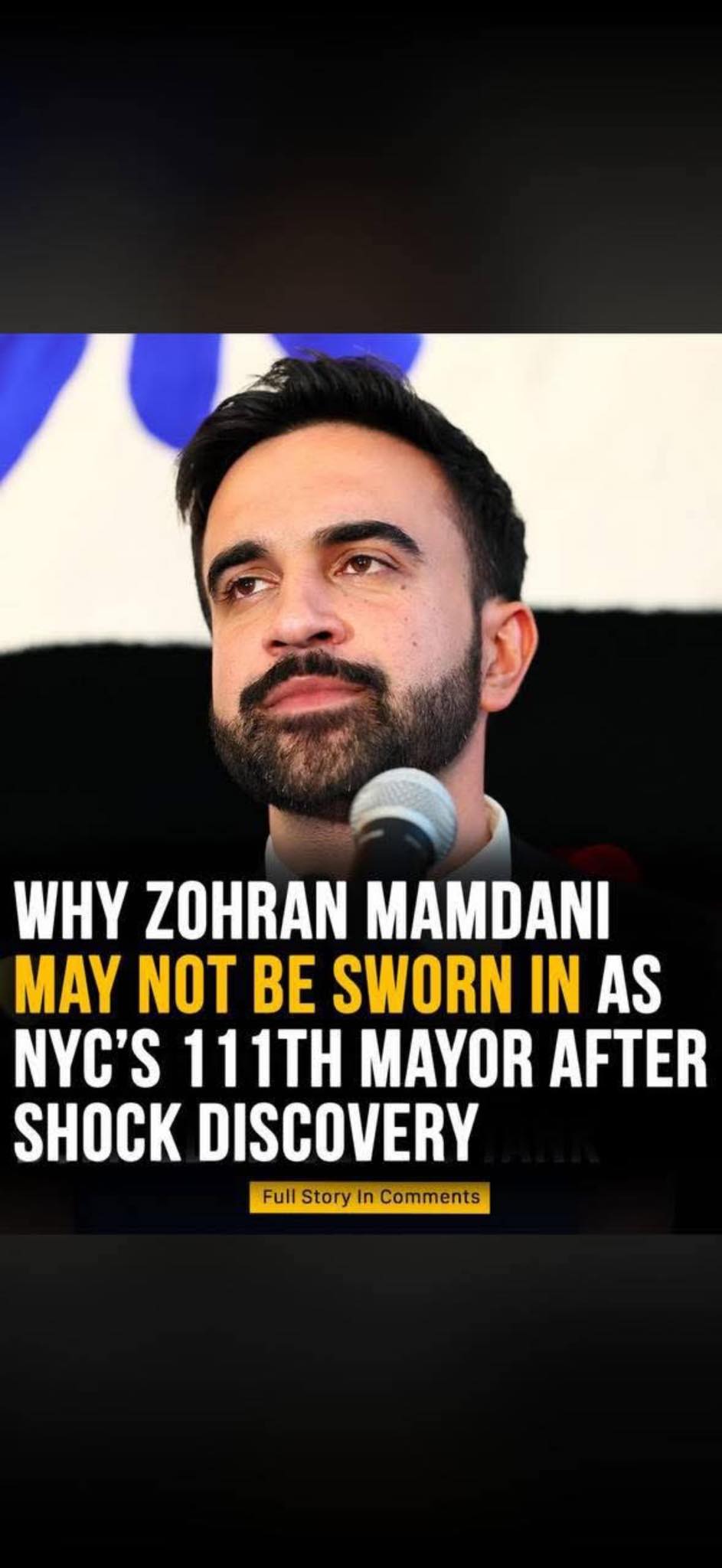
The Republican examination of ways to block Zohran Mamdani from taking office if he wins represents a remarkable — and controversial — moment in American political history. Whether it ends as an unsuccessful strategy, a polarizing talking point, or a legal battle that reaches high courts, it underscores the deep divisions gripping the nation.
At its core, this debate forces Americans to grapple with basic questions about elections, constitutional protections, political rivalry, and the balance between vigorous oversight and respect for democratic outcomes.
ADVERTISEMENT
