ADVERTISEMENT
Skin
Organs
That accumulation can remain long after the treatment stops.
Why the Knees?
Joints like the knees are particularly vulnerable to long-term changes because:
They experience constant movement and stress
They have complex soft tissues and fluid-filled spaces
They are often the primary targets of inflammatory diseases like rheumatoid arthritis
If gold-based compounds circulate in the bloodstream, small amounts can deposit in areas where inflammation and immune activity are already present.
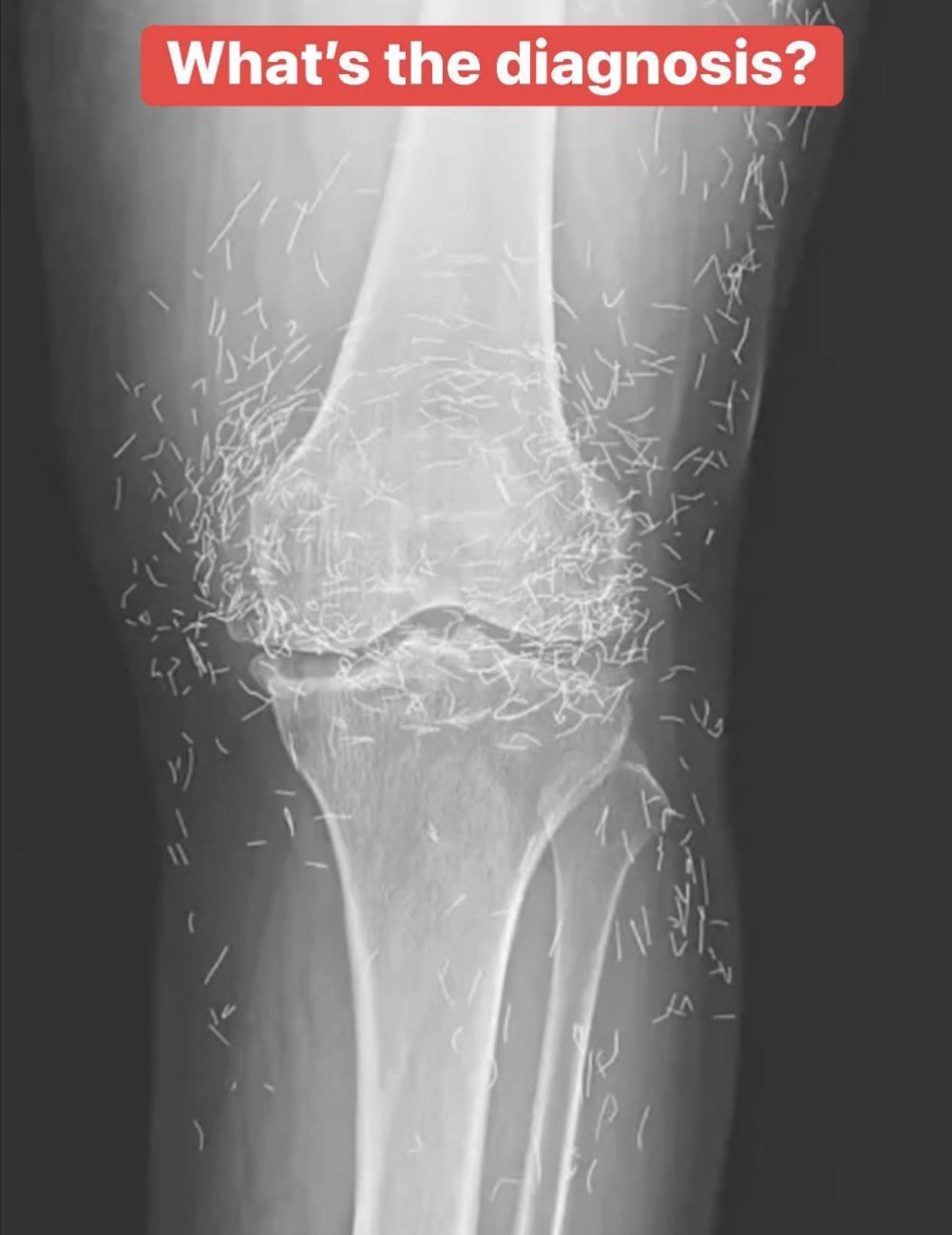
Over time, those deposits may become visible on imaging scans—or even during surgery.
That depends.
In many cases, gold deposits in the body don’t cause noticeable symptoms. Some patients live their entire lives unaware that trace amounts of gold remain in their tissues.
In other cases, gold accumulation can contribute to:
Joint irritation
Skin discoloration (a condition called chrysiasis)
Localized inflammation
However, it’s important to note that the woman’s knee pain wasn’t caused by “gold poisoning” in the dramatic sense people imagine. The discovery was incidental, meaning doctors found it while investigating something else.
Why Doctors Use Metaphors Like “Gold Mine”
Medical professionals often use metaphors when speaking informally, especially when something is visually striking or scientifically unusual.
When surgeons or radiologists encounter:
Dense, shimmering particles
Unexpected materials in tissue
Rare findings tied to older treatments
They sometimes reach for vivid language to describe it.
The phrase “gold mine” wasn’t meant literally. It was shorthand for:
“This is rare, unusual, and fascinating from a medical standpoint.”
Unfortunately, metaphors don’t always survive the journey from hospital chart to headline.
How the Internet Turned Science Into Sensation
Once the story hit social media, nuance disappeared.
Posts suggested:
The woman could be “worth millions”
Doctors were shocked by “real gold in her body”
Her knees were somehow producing gold
None of that was true.
What was true is arguably more interesting: this case highlighted how past medical treatments can leave long-term physical traces, and how modern imaging allows doctors to discover them decades later.
It also showed how quickly complex medical stories get simplified into something misleading.
What This Case Teaches Us About Medicine
Beyond the headline, this story offers several important takeaways.
1. Medical Treatments Leave Footprints
Even when a therapy is no longer widely used, its effects can persist. The human body records its history in subtle ways—through scars, deposits, and changes that may only become visible years later.
2. Old Medicine Isn’t “Bad” Medicine
Gold therapy wasn’t quack science. At the time, it was one of the best tools doctors had for managing severe autoimmune disease. Many patients benefited from it significantly.
Medicine evolves. What matters is context.
3. Imaging Technology Is Astonishingly Precise
Modern scans can detect materials at microscopic levels. What once would have gone unnoticed can now be identified, studied, and documented in incredible detail.
That’s not science fiction—that’s progress.
No, You Can’t Mine the Human Body
Let’s clear this up plainly: there is no scenario in which gold deposits in the human body are valuable in a financial sense.
The amounts involved are tiny. Extracting them would be impossible, unethical, and medically unnecessary.
The “gold mine” exists only as a metaphor—and as a reminder that our bodies can hold unexpected stories.
Why These Stories Captivate Us
There’s something irresistible about the idea that the human body still holds surprises. In a world of scans, data, and diagnostics, we like to believe there are mysteries left to uncover.
Stories like this sit at the crossroads of:
Science
Curiosity
A touch of wonder
They remind us that medicine isn’t just about fixing problems—it’s also about discovery.
The Bottom Line
Doctors didn’t strike literal gold in a woman’s knees.
What they found was far more meaningful: a rare medical artifact from an earlier era of treatment, preserved inside the body like a biological time capsule.
The real treasure isn’t metal—it’s knowledge.
And the next time you see a headline that sounds unbelievable, remember: the truth is usually less flashy, more complex, and far more interesting than the clickbait version.
ADVERTISEMENT
