ADVERTISEMENT
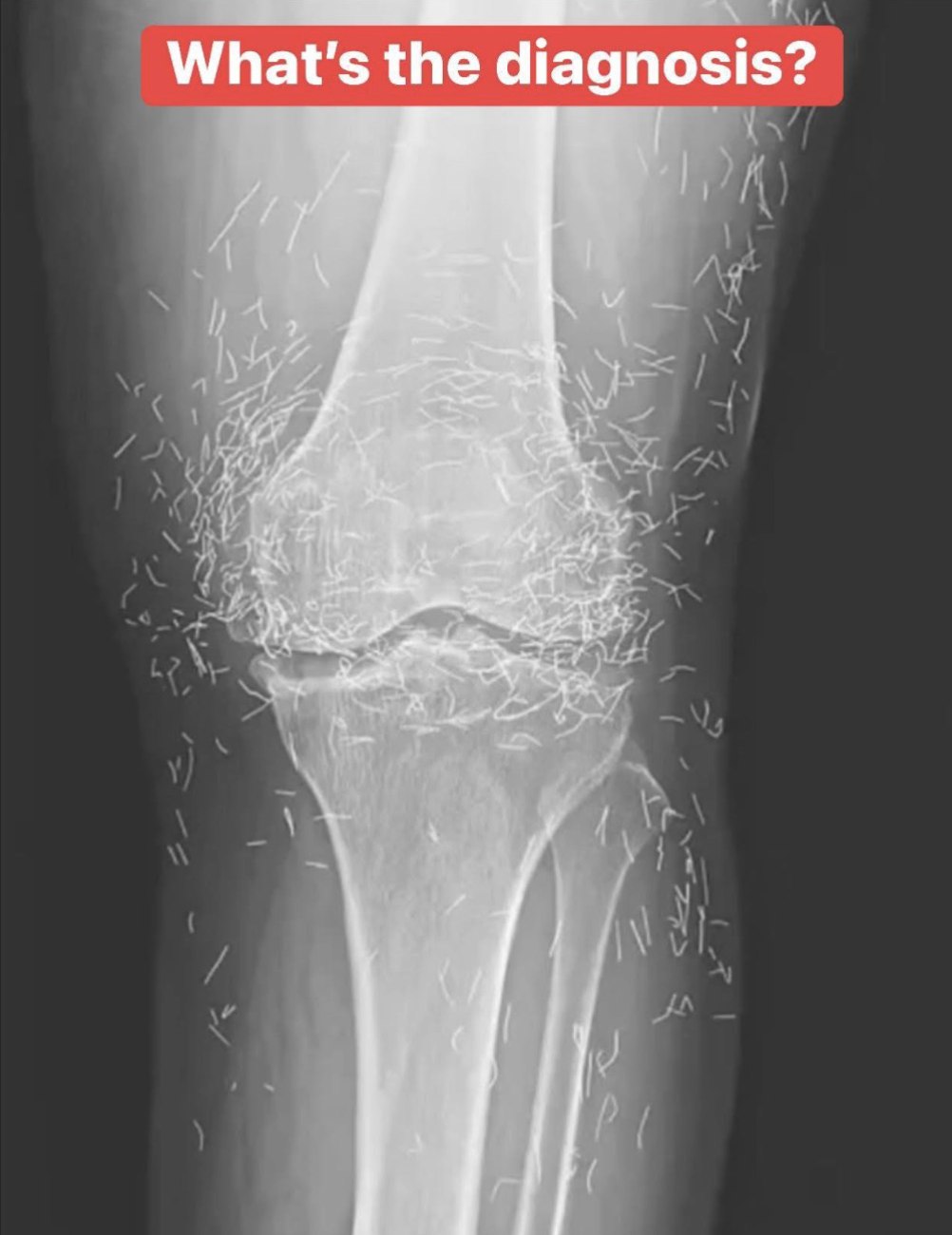
That’s right: these weren’t fragments of metal that had accidentally gotten into her body — they were implanted, left in place by practitioners of a type of acupuncture intended to yield chronic stimulation of certain tissues. In traditional acupuncture, thin needles are inserted at specific points on the body to relieve pain, stress, or disease. In gold‑thread acupuncture, short segments of gold thread are inserted using the needles and then deliberately left embedded in tissues in hopes of prolonging the therapeutic effect.
To most Western medical professionals, seeing such a dense collection of gold threads in a joint region on X‑ray is unusual — hence the reference to a “gold mine.”
Gold‑thread acupuncture originates from traditional East Asian medicine, where practitioners have long believed that inserting thin threads of metal such as gold into tissues could provide ongoing stimulation to specific points, with potential anti‑inflammatory or analgesic effects.
Unlike standard acupuncture, where needles are inserted briefly and then removed, gold‑thread acupuncture purposely leaves tiny, sterile gold filaments in place — potentially offering long‑lasting tactile or energetic stimulation according to practitioners.
However, while the practice has been used in parts of Asia (particularly South Korea and China) for conditions like arthritis and chronic joint pain, scientific research supporting its effectiveness is extremely limited, and most clinical studies do not show clear benefits over placebo.
In the case of this patient, there was no apparent evidence that the gold threads themselves directly alleviated the arthritis; in fact, some experts note that alternative treatments can delay access to proven medical therapies, which may lead patients to seek relief too late.
How Were the Gold Threads Left Behind?
In gold‑thread acupuncture, the process typically involves:
Using standard acupuncture needles to place short lengths of pure gold thread into subcutaneous tissue or around joint areas.
Leaving the threads in place (rather than removing them), with the idea that these filaments will act as continuous micro‑stimulators.
Repeating treatments or placing threads in multiple areas based on the pain pattern or condition.
This was clearly the case with the South Korean woman: over multiple years of acupuncture treatments, doctors inadvertently helped place hundreds of tiny gold threads around her knee joints, then only discovered them when an unrelated X‑ray was taken.
Why Doctors Called It a ‘Gold Mine’
The phrase “gold mine” was used because the density of metal flecks seen on the X‑ray looked like a mining strike — hundreds of tiny, bright spots peppered throughout the bone and soft tissues around the joint.
According to the case report:
The gold was visible as distinct flecks around the kneecap and tibial bone — far more than you’d expect in most clinical imaging scenarios.
The impact on diagnosis was practical: the metal fragments made it harder for doctors to interpret subsequent imaging, complicating standard evaluation techniques.
In some cases, such embedded metal can interfere with MRI scanning, which relies on magnetic fields and can pose risks if metal moves or heats.
Are There Risks to Leaving Metal Threads in the Body?
Yes — while gold is generally biocompatible, the presence of any foreign object inside the body can have health implications.
Medical professionals have noted possible complications, including:
Inflammation and irritation: Even sterile, inert materials can sometimes trigger localized immune responses.
Cyst formation or soft‑tissue reaction: In some cases gold embedded in tissue has been linked with cysts or other localized changes.
Interference with imaging: As mentioned, metal can obscure X‑ray images and complicate MRI scans, potentially masking or mimicking other issues.
Migration risks: There are rare reports of gold threads migrating within soft tissues over time, which can lead to inflammation or discomfort elsewhere in the body.
Because of these risks, many orthopedic specialists caution against the practice — especially when it may delay access to evidence‑based therapies for conditions like osteoarthritis or rheumatoid arthritis.
What This Case Teaches Us About Alternative Medicine
Stories like this are not just fascinating curiosities — they are instructive about the broader relationship between alternative medical practices and conventional medicine.
1. Imaging Can Reveal Hidden Histories
Sometimes, X‑rays or scans reveal more than bone or soft tissue — they can expose a patient’s medical “history,” including unanticipated treatments, implants, or foreign bodies. In this case, the scattered gold threads told a story of years of treatment choices.
2. Not All Treatments Are Backed by Evidence
Gold‑thread acupuncture remains a treatment practiced by some, but there is no strong scientific consensus that it provides consistent pain relief for conditions like osteoarthritis. This case underscores the importance of evidence‑based medicine in guiding treatment decisions.
3. Alternative Options Should Complement — Not Replace — Standard Care
While alternative therapies can sometimes be part of a patient’s care plan, they shouldn’t replace treatments with proven efficacy — especially for chronic and progressive conditions. Delays in seeking effective medical care can worsen outcomes.
Doctors’ Takeaways and What They Recommend
Clinicians who reviewed the case and reported it in medical literature emphasized several key lessons:
Awareness: Doctors should be aware of the possible presence of non‑conventional implants when unusual radiographic findings are seen.
Communication: Patients should be encouraged to disclose all treatments they have received, including alternative therapies.
Monitoring: Embedded materials like gold threads can be monitored over time through imaging to watch for migration or complications.
Evidence‑based guidance: Where possible, clinicians should help guide patients toward treatments supported by clinical evidence, while acknowledging cultural practices and patient preferences.
Final Thoughts: A Golden Reminder
The strange case of the “gold mine” in a woman’s knees is a vivid reminder that medicine is as much an art as a science — shaped by tradition, cultural practice, and individual choices.
While the visual of hundreds of gold threads embedded in a joint may seem almost surreal, it also highlights how the body records every intervention — intentional or otherwise — and how doctors must always be ready for the unexpected when interpreting imaging or treating chronic conditions.
Most importantly, it reminds patients to work closely with their healthcare providers, to ask questions about the evidence behind treatments, and to ensure that all aspects of their medical history are open for discussion — because sometimes, what’s hidden beneath the surface can be more fascinating (and medically significant) than anyone expects.
ADVERTISEMENT
