ADVERTISEMENT
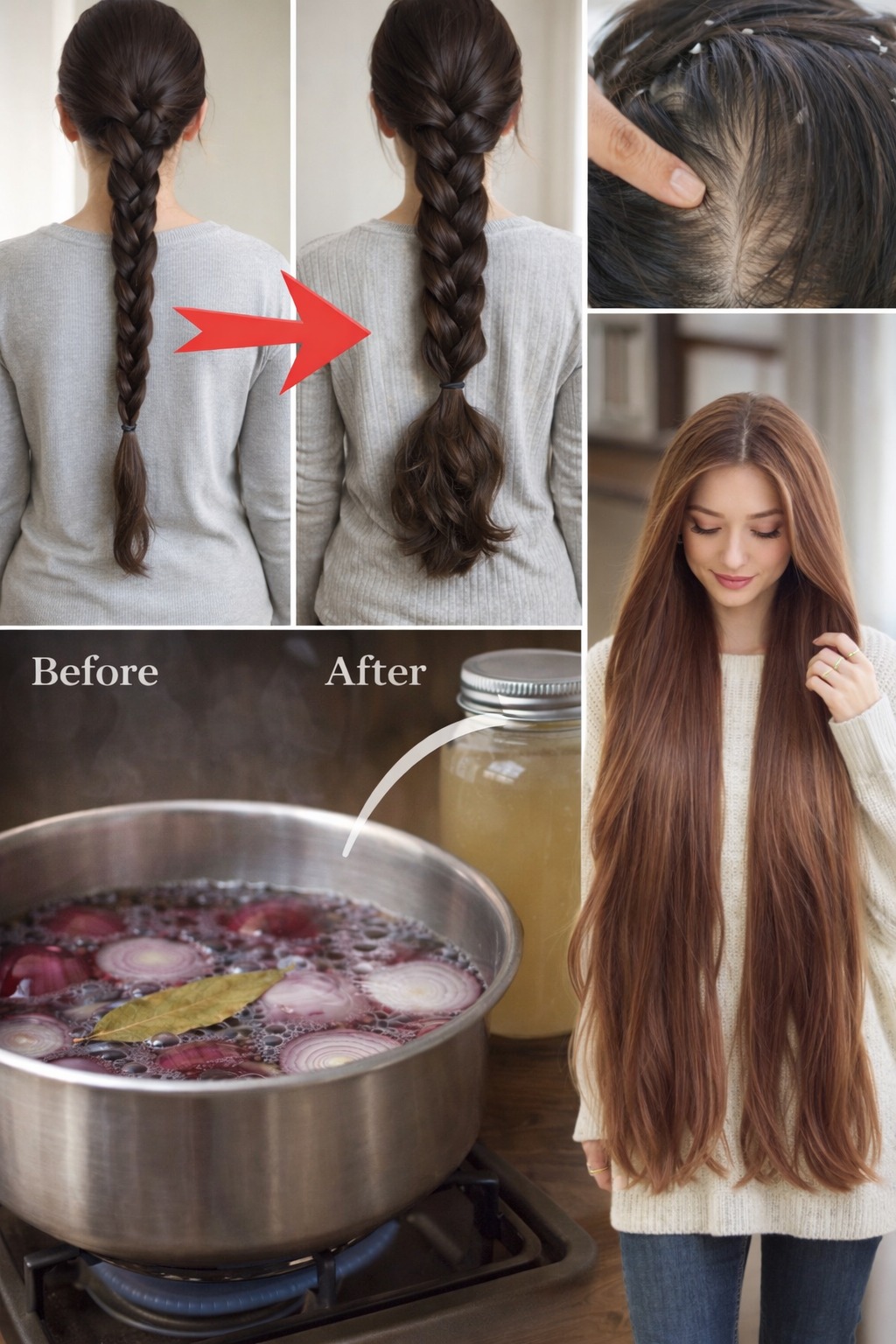
While red onion hair rinses sound promising, scientific evidence is still limited.
🔬 What Research Exists
A small clinical study found that applying onion juice helped some participants with patchy hair loss regrow hair faster than a control group.
Onion juice’s antibacterial properties are also documented in laboratory settings.
However, most of this research:
Used raw onion juice, not diluted rinses
Included small sample sizes
Did not consistently measure long-term outcomes
No large-scale, peer-reviewed studies definitively prove that red onion hair rinses increase hair growth or reduce hair fall in the general population.
🧠 What We Still Don’t Know
Whether regular onion rinses improve hair growth rate beyond normal expectations
How effective they are compared to established hair growth treatments (like minoxidil or finasteride)
Whether different onion types (red onion vs. yellow onion) offer significantly different results
Optimal preparation and application methods
Red Onion vs. Other Onion Types
Red onions are particularly rich in anthocyanins—a type of antioxidant—compared to yellow or white onions. Antioxidants are believed to mitigate oxidative stress on hair follicles, which can, in theory, support a healthier scalp environment.
That said, no study conclusively proves red onions are superior for hair health. Yet, many DIY communities prefer red onions simply because they’re milder in scent and often richer in color and perceived nutrients.
If you decide you want to try a red onion rinse safely at home, here’s a guide:
🧅 Ingredients
1–2 medium red onions
Water
Optional: essential oils (like lavender or rosemary) for scent
🧰 Equipment
Blender or juicer
Fine strainer or cheesecloth
Bowl
Spray bottle (optional)
📌 Instructions
Peel and Chop Onions
Cut the onions into chunks.
Blend or Juice
Use a blender with a little water, or a juicer to extract the juice.
Strain
Strain the onion juice to remove solids.
Dilute with Water
Mix onion juice with an equal amount of water to reduce irritation.
Optional Aromatics
Add a few drops of essential oil for a more pleasant smell.
Apply to Scalp
Massage gently into the scalp with your fingertips about 10–15 minutes before shampooing.
Rinse Well
Shampoo and condition afterward to remove any residual odor.
🕐 Frequency
Most DIY guides recommend using this rinse once or twice a week, not daily.
Potential Benefits People Report
While scientific proof is limited, many individuals report anecdotal benefits:
🌱 Reduced Hair Fall
Some people find that hair breakage feels reduced after consistent use.
🍃 Improved Scalp Health
Anecdotal evidence suggests less itchiness or flakiness over time.
💆♀️ Enhanced Shine and Softness
Some users note that their hair feels softer or shinier after a few rinses—though this may be due to the rinsing and massage itself.
Risks and Cautions
Natural doesn’t always mean safe for everyone.
🚫 Scalp Irritation
Onion juice is acidic and can irritate sensitive skin. If it stings or burns, rinse immediately and discontinue use.
👁 Eye Contact
Avoid contact with eyes—onion juice can cause significant irritation.
🚫 Allergic Reactions
If you have a known onion or allium allergy, do not use this rinse.
🚫 Not a Replacement for Medical Treatment
If you are experiencing significant hair loss, thinning, or scalp conditions (like psoriasis or severe dandruff), consult a dermatologist or healthcare provider first.
Other Natural Remedies Worth Considering
If you’re interested in natural hair support but want options beyond onion rinses, here are a few evidence-backed alternatives:
🌿 Scalp Massage
Improves circulation to hair follicles.
🥬 Nutrient-Rich Diet
Protein, iron, omega-3s, and biotin support hair health from the inside.
🧴 Rosemary Oil
Some studies suggest scalp application may support hair thickness.
💊 Supplements
Biotin, zinc, and collagen supplements may help if you’re deficient.
These alternatives can be used alone or alongside an onion rinse if tolerated well.
What Experts Say
Most dermatologists and trichologists (hair specialists) agree that while natural rinses like onion juice are unlikely to cause serious harm for most people, they should not be considered a standalone treatment for hair loss.
Medical-grade treatments, when appropriate, offer results backed by research—while plant-based rinses may support overall scalp health or feel beneficial through routine care.
Hair Growth and Hair Fall: What Factors Really Matter
Before concluding, it’s important to recognize that hair growth and hair fall are influenced by many variables:
🧬 Genetics
Your growth cycle is partly determined by your DNA.
🩺 Hormones
Imbalances (e.g., thyroid or androgen levels) can affect shedding.
🍎 Nutrition
Protein, iron, and micronutrients play key roles.
🧠 Stress
Chronic stress can push hair into shedding phases.
💊 Medications
Some drugs list hair loss as a side effect.
A homemade rinse alone cannot outpace these fundamental influences—but it may support a healthier environment for growth.
Final Thoughts: Should You Try a Red Onion Hair Rinse?
So, could a red onion hair rinse support faster hair growth and reduced hair fall?
The honest answer is:
Possibly—but evidence is limited and mostly anecdotal.
There’s no definitive scientific proof that onion rinses directly accelerate hair growth. However, the nutrients in onions and the act of scalp massaging may contribute to a healthier scalp environment, which is conducive to improved hair quality and reduced breakage.
For some people, this routine becomes a gentle, inexpensive addition to overall hair care. For others, it may provide no noticeable change. Either way, it’s generally low-risk when performed carefully and sensibly.
If you decide to try it, listen to your scalp—and treat your routine as one part of a broader approach to hair health that includes nutrition, medical consultation when needed, and realistic expectations.
After all, hair growth isn’t a race. It’s a journey—one that benefits from patience, care, and a well-rounded approach.
ADVERTISEMENT
